
President of the Islamic Republic of Iran (IRI) Hassan Rouhani in December 2014 introduced to the Mejlis (Parliament) the draft budget for the next Iranian year (1394), which will come on Saturday, March 21, 2015. The new budget, like the previous one, was approved under the action of still tough sanctions, falling oil prices and during the lukewarm negotiations on the Iranian nuclear program.
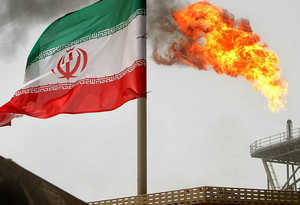 Tehran still blames the Persian Gulf monarchies (in particular the Kingdom of Saudi Arabia) for lots of its own problems. The rhetoric towards the United States has changed little. But, apparently, the Iranian leadership had to take into account new global economic trends and new geopolitical situation that is developing in the world.
So, a few words about the new budget. When preparing the budget for the next year, Iran is based on an oil price of around 80 US dollars per barrel, said in an interview with the Iranian news agency IRNA, the Commissioner of Planning and Budget of the Iranian Majlis Gholam Reza Tadzhgardun. Remember that in the budget for the last year the price of oil was laid at the level of 100 US dollars per barrel. G. Tadzhgardun noted that if the forecasts are not confirmed, and the price of oil returns to the level of 100 US dollars per barrel, Iran intends to place surplus funds, which are formed as a result of excessive profits, into its National Development Fund. At the same time, he said, Iran is taking active diplomatic steps to talk its partners in OPEC, as well as other major players in the oil market into reduction of oil production by a total of 1 million barrels a day in order to stop further fall in prices.
|
Note Iran has the third-largest proven oil reserves after Saudi Arabia and Venezuela (18.8 billion tons — 9.9 % of world reserves). Even in the face of restrictions on the export of oil, the Islamic Republic will maintain a positive trade balance. Besides, along with new players (primarily African ones)’ coming onto the oil market, the Iranian factor continues to play an important role in reducing the price of oil. European states wishing to diversify energy supplies from Russia have long been ready to purchase oil and gas in Iran, but the stumbling block between them and the Islamic Republic remains the unresolved problem of Iran’s nuclear program (INP). According to Iranian economic analysts, Iranian President Hassan Rouhani continues to be inconsistent in Iran’s new budget, “again offering the Iranian people the pain of neo-liberalism without hope for the future, which threatens with new dangerous tendencies in the economy, new risks that in the long run will plunge Iran into economic chaos of Ahmadinejad’s reigning”. |
The conceptual basis of the budget
 The draft budget begins with Imam Ali (the first and most revered Shiite imam)’s words from the Qur’an, the meaning of which, if paraphrased into our language is as follows: “Proper planning of the economy increases the wealth of the people, while the wrong one — destroys it.” So, if we turn to some Iranian economists, we may hear in response the words about “budgeting and absence of any planning”. In particular, they state that the key concept of the new budget is none other than the “ornate version of the neo-liberal model of non-interference”, which was quite popular in the 1970s-1980s.
Supporters of the neo-liberal economic policy come out for an extensive liberalization of the economy, free trade and cuts in public spending in order to enhance the role of the free market, a human and the private sector in the economy. But in reality, economic liberalism presupposes political liberalism, which is completely absent in the Islamic Republic of Iran. At this, the highest priority is given to programs to strengthen the defense and security of the country. Accordingly, the cost-saving measures in the form of a significant reduction in spending on social programs, devaluation of the national currency (Iranian Rial), privatization of state enterprises and regressive taxation remain the main political instruments.
The budget also includes the idea of “the economy’s resistance” that is in conflict with such ideas of neo-liberalism, as the free market and free trade.
Budget without growth
Iranian budget is capped at 294 billion US dollars at the official exchange rate of 28.500 Rials for 1 US dollar, which is 4 percent more than the 2013 budget.
|
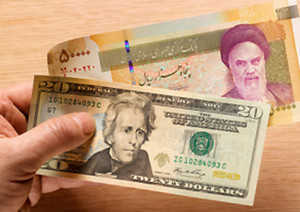
Three years ago, on 27 January 2012, Iran introduced a single fixed exchange rate of the national currency to the US dollar, which was caused by the falling value of the Rial after the introduction of the EU’s sanctions against Tehran. It was 12.260 Rials for 1 US dollar. This rate was valid for all transactions, including imports… and also acts for students abroad, or those planning to go abroad. At this, the Central Bank of Iran threatened to close exchange points if they sold dollars to individuals by more than 5 % above the new official rate. Now Iran has actually two exchange rates — the official exchange rate and the one of private exchange points. Dollar exchange rate on the informal market is by more than 80 % higher than the official rate set by the Central Bank of Iran. Thus, taking into account the fall in oil prices, the projected figure is unlikely to be realized. A slight increase in the budget as compared with the previous one, also offers a scenario of “zero growth” for the economy. This is despite the fact that Iran’s population grows by 1.8 % per year, and its incomes decline, unemployment continues to rise among young people. The central authorities do not plan to increase spending on social programs, ignoring the declared principle of “social justice”. |
 Note
NoteWhere money comes from into the budget
The main sources of the primary income into the budget are the income from the sale of oil and non-oil exports, as well as taxes and revenues from privatization.
The introduction of sanctions reduced Iran’s oil exports by 40 %, which made about 1.3 million barrels per day. This figure includes the official sales and the sale of oil on the black market, which according to some sources makes about half of the official market. Due to the banking sanctions, a significant proportion of the income from the sale of Iran’s oil remains in banks of countries-buyers. According to the results of the “interim nuclear deal”, Iran has gained an access to about 5 % of the “frozen” funds from the sale of crude oil.
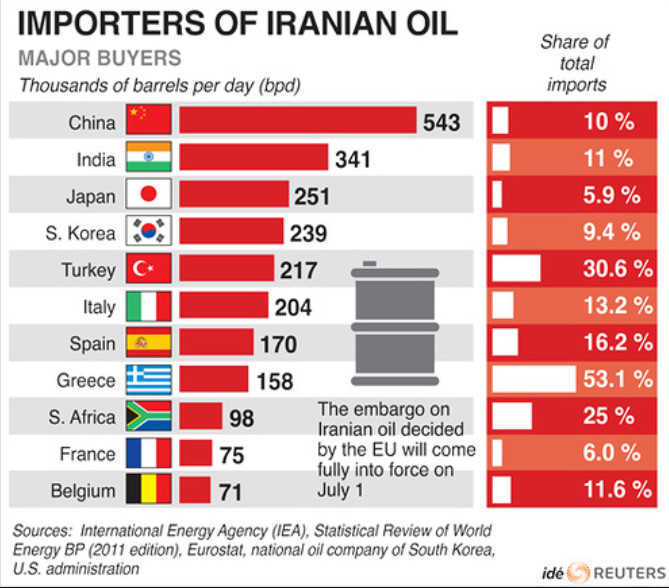 Currently, just over 70 percent of foreign exchange earnings of Iran are funds received from the sale of oil, gas, petroleum and related products. The forecasted price per barrel for the budget is 72 US dollars. It is assumed that Iran with difficulty, but can earn 53-55 billion US dollars from the sale of oil and related exports. At the same time, of this amount, about 15 billion US dollars will be spent by the Ministry of Oil of Iran to maintain current oil production at the level of around 3 million barrels per day.
According to the International Monetary Fund (IMF), Iran, taking into consideration the economic sanctions, in the next two years is to sell its oil at a price not less than 131 US dollars per barrel just to cover the budget deficit.
Funds from non-oil exports could be considered the “hope” of the Iranian government to compensate for the acute shortage of funds in the budget. In the past, this source of income used to bring about 20 billion US dollars a year, and thus one of the important tasks of Rouhani’s government is its planned increase by 20 % in 2015. Economists believe that the non-oil exports can bring about 22 billion US dollars in profits.
So, Iran can expect in the new Iranian year (March 2015-March 2016) revenues of foreign currency at the level of 57-59 billion US dollars. The fall of oil prices has cost Iran about 7 billion US dollars, which means that the chronic budget deficit will keep growing.
The main items of non-oil exports of Iran are cheap cars, which are exported to Iraq, Syria and Afghanistan. The second largest source of revenue is petrochemical products, mainly shipped to China. A considerable share in the exports is the world-famous carpets, canned foods, vegetables, fruits and dried fruits that are available in various countries around the world.
The projected increase in non-oil exports is based on the assumption that either a comprehensive nuclear deal will be concluded, or the status quo in the region will remain virtually unchanged.
At this, analysts agree that the fate of the nuclear deal remains uncertain, but the situation in the region is definitely getting worse.
|
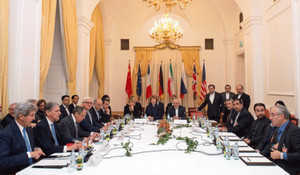
In Geneva, February 22 was held another round of talks between Iran and the “Six” of international mediators on the nuclear program. The plenary meeting was preceded by US Secretary of State John Kerry’s meeting with the Foreign Minister of Iran J. Zarif and a coordination meeting of the member countries of the “Six” without the participation of Iran. The parties want to coordinate the political part of the agreement to resolve the Iranian nuclear issue before March 24. John Kerry said that the United States is against the extension of the terms of negotiations, but pointed out that there were still “substantial disagreements” with Iran. Meanwhile, the IAEA has distributed a report saying that Iran, under certain agreements, hides military works aimed at developing nuclear warheads for missiles. Saudi Arabia, Egypt, Qatar and the UAE are concerned that the possible agreement between the West and Iran on Tehran’s nuclear program could “encourage countries in the region to develop their nuclear capabilities to be equal in strength to the Iranian ones”. |
 Note
Note
So, the Islamic Republic is coming into the new year with a budget and a solid load of unresolved economic problems that threaten to bury President Hassan Rouhani’s good intentions.

